Summit Positions with Peter Hansen – Mountain Stories, Mountain Futures
In this episode, Jason König and Jonathan Westaway interview Peter Hansen about his research on mountain history in the Alps and the Himalayas.
Peter Hansen is Professor of History and Director of International and Global Studies at Worcester Polytechnic Institute in Massachusetts. He has been a leading figure in the recent expansion of interest in mountaineering history. His 2013 book The Summits of Modern Man: Mountaineering after the Enlightenment explored the idea of the summit position—in other words the image of the mountaineer standing alone on a mountain summit—as a symbol of individual sovereignty and enlightenment. Other publications include the 2024 volume Other Everests: One Mountain, Many Worlds, jointly edited with Paul Gilchrist and Jonathan Westaway. He is currently working on another book on Everest.
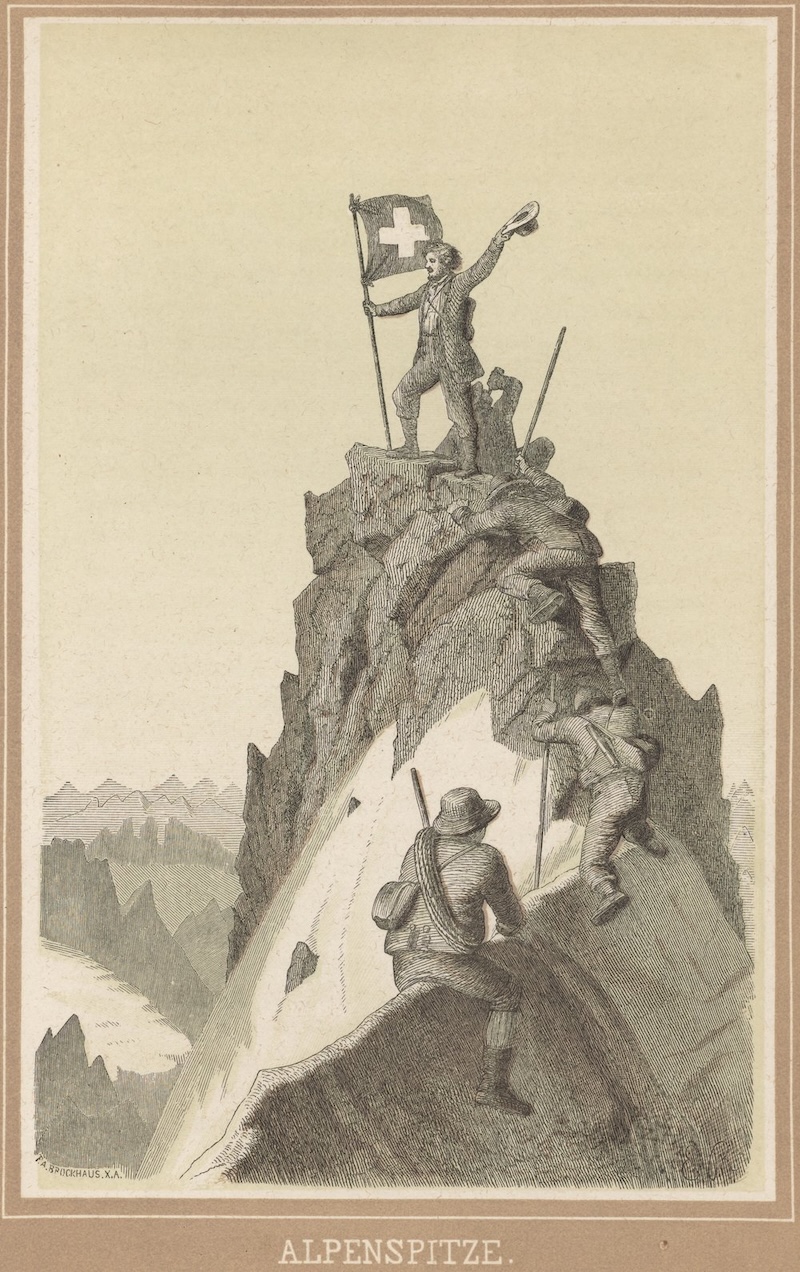
Alpenspitze 1861, Emil Rittmeyer
Peter talks first about the origins of his interest in mountain and mountaineering history, through a chance encounter with a reference to the Alpine Club library in a list of archives. We then turn to The Summits of Modern Man, looking among other things at the way in which Peter’s concept of the ‘summit position’ can help us to think freshly about the idea of mountaineering as a manifestation of modernity. We encounter some of the characters and incidents from 19th- and early 20th-century mountaineering history that play a central role in the book, for example in the repeated debates in mountaineering history about who was first to reach particular summits, illustrated here through Peter’s retelling of the story of the first ascent of Mont Blanc in 1786 by Jacques Balmat and Michel Paccard.
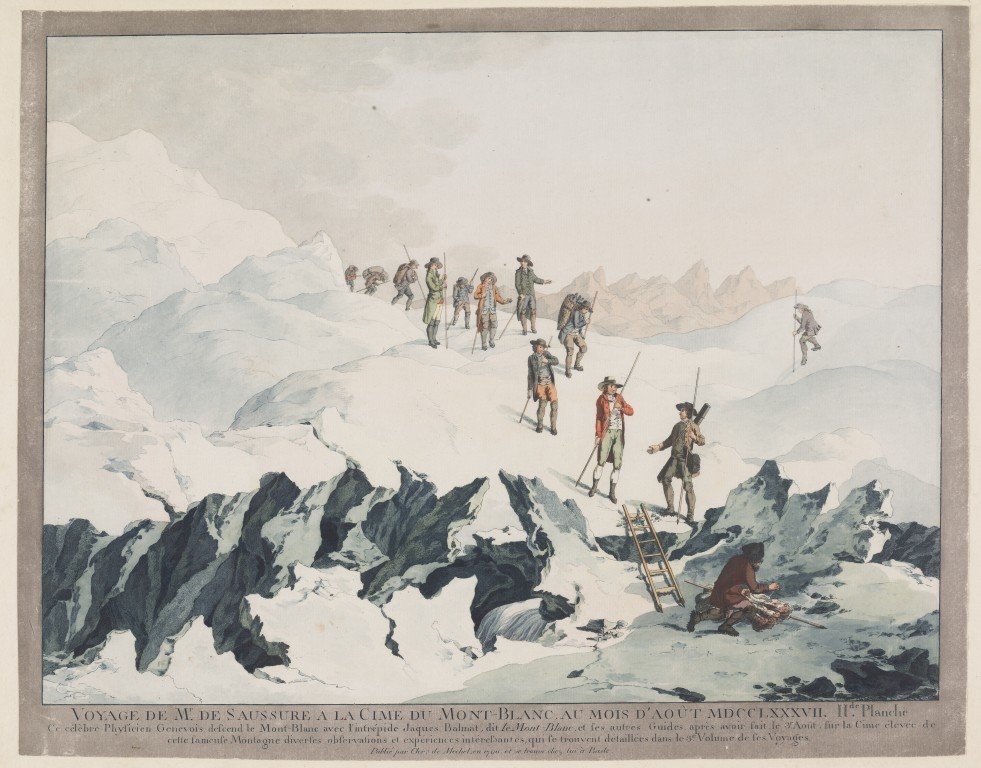
Voyage de Mr de Saussure à la cime du Mont Blanc au mois d’août MDCCLXXXVII, sketched by Marquard Wocher and engraved by Christian von Mechel in Basel in 1790
In the second half of the episode we turn to Peter’s work on Everest, particularly the Other Everests project, looking especially at the way in which the book and accompanying exhibition set out to open up new indigenous, non-western perspectives on mountaineering history, and also more broadly at the huge potential for postcolonial approaches in mountain studies. Finally we look at some possible futures for research on Everest, and reflect on the implications that work might have for local communities in the region.
All images from https://digital.wpi.edu/collections/summits
Follow the project on Bluesky @futuremountain.bsky.social.
Follow the podcast on:
For versions with transcripts or closed captions, view the Mountain Stories, Mountain Futures playlist on YouTube.
Sound editor: Zofia Guertin
Video editor: Mary Woodcock Kroble